Choosing (and Preparing) Your Garage Door for a Quebec Winter
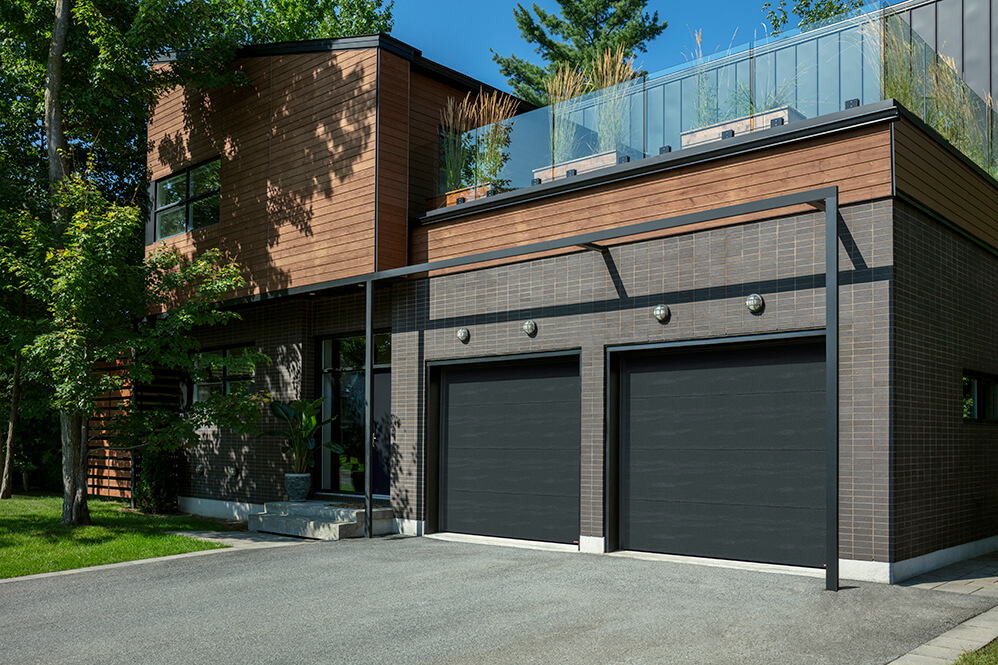
In Quebec, a garage door spends the winter being put to the test: swings from -30°C to +5°C, slush, salt, wind. Well chosen and well maintained, it keeps your garage comfortable and your heating costs under control. Here are the essentials.
Insulation: the R-value
If your garage is attached to the house or heated, the door’s insulation is criterion No. 1. A door with injected polyurethane foam like the Garaga Standard+ offers an R-16 factor: less heat loss, less condensation, and a garage several degrees warmer in January. For a detached, unheated garage, a lower insulation level may be enough.
Weathertightness: weatherstripping and threshold
The best insulation is useless if air gets in around the door. Every fall, check the bottom weatherseal (it hardens and cracks over the years), plus the side and header seals. A supple weatherseal that hugs the floor keeps out powdery snow and drafts.
Fall maintenance in 15 minutes
- Lubricate hinges, rollers and tracks with a silicone lubricant (twice a year, including once before winter);
- Listen: a door that squeaks or strains often signals a tired spring — cold weather makes it worse;
- Test the opener’s safety reversal;
- Clear ice from the threshold — forcing a door frozen to the ground can break cables and panels.
Power outages: think battery backup
Winter outages always come at the worst time. Several LiftMaster openers offer an integrated battery backup that opens and closes the door even without electricity — a real plus at -25°C.
Made here, for here
The Garaga doors we install are designed and manufactured in Quebec, for the Quebec climate. And our service team repairs springs, cables and openers of most brands, all winter long. Free quote or give us a call.